
Last Saturday at the “Völkerkunde Museum” marked a profound family reunion that bridged continents. Traveling all the way from Colombia to Zurich, my mother, Cruz Quilina Piraza Chamapuro, and Gloria Amparo Murillo Moreno, descendants of the artisans behind a showcased collection, shared a piece of our heritage with the attendees.
I had to go, visit Zurich and see my mother for the very first time in my life.
Together we crafted bags from tree bark, this shared activity was a special way to connect and delve into conversations about the history and the current situation of the local population.
This unique collection from Noanamá, originally gathered for commercial purposes, now plays a living role in sharing and preserving knowledge and heritage. It shows us the value of each object as a piece in a world of knowledge.
The aim of that afternoon was not only to observe the objects but to understand them in their context, to appreciate the skills required to craft them, and to acknowledge the conversations and relationships they represent. It was a day full of emotions and realizations.
Afterwards navigating the streets of Zurich, my mother and I tried to communicate, bridging the gap between her primarily Spanish and my limited Spanish knowledge. The city’s beauty surrounded us, but our focus was on understanding each other, piecing together words and gestures, making our shared moments all the more poignant.
“The Flow of the Waters – The San Juan River”
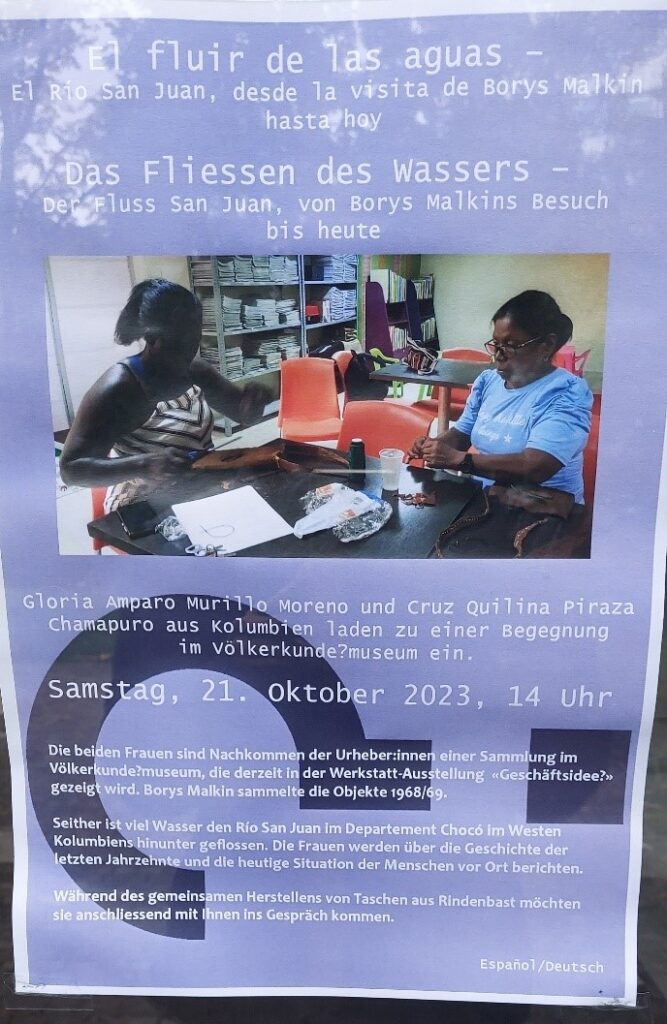
Last Saturday, the 21st of October 2023, the “Völkerkunde Museum” would become the backdrop for a reunion unlike any other.
Galoria Amparo Murillo Moreno and Cruz Quilina Piraza Chamapuro from Colombia had invited me to come to the museum. What made this occasion special was that Cruz Quilina is my biological mother. Although we had been separated by distance and time, our paths were about to cross in Europe.
These two women, descendants of the artisans behind a collection that now stood proudly displayed at the museum, were here to share a narrative.
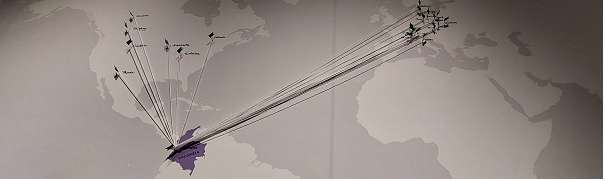
Borys Malkin had collected these artefacts back in 1968/69. Since then, the San Juan River in the Chocó department of western Colombia had witnessed many changes, reflecting the evolution of its surrounding community. Gloria and my mother were here to shed light on this history and discuss the current state of their people.
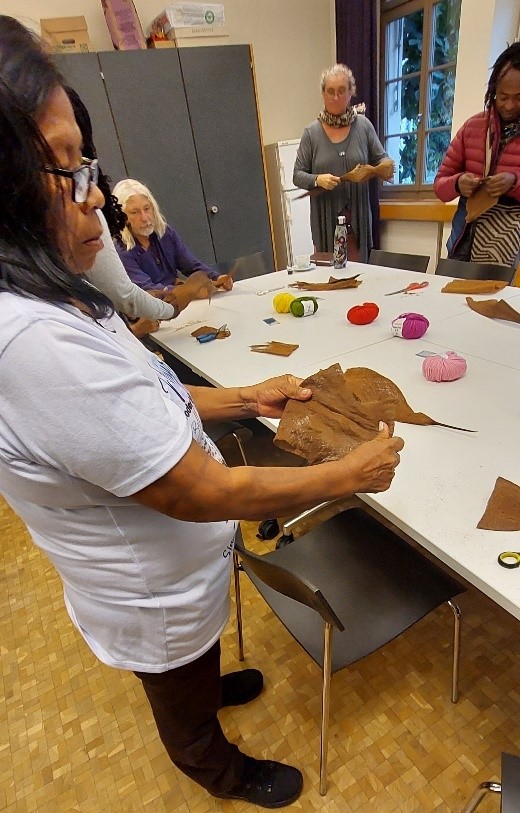
As the event progressed, we participated in a shared activity – making bags from tree bark. It was during this time that our communication challenges became evident. However, the warmth in her eyes and our mutual use of gestures bridged the gap, revealing emotions that words alone could not convey.
The collection from Noanamá in Chocó, Colombia, on display at the museum, had an intriguing background. It originated from commercial collecting, an ‘object set’ that Borys Malkin had acquired between 1968 and 1972. Malkin, a Polish ethnologist and entomologist, had a unique approach to his craft. His expeditions across South America were not solely for academic pursuits but also had a commercial angle. He would purchase artefacts, document their origins, and then offer these collections to museums in North America and Europe.

Borys Malkin’s reputation in the museum world was noteworthy. Walter Raunig, an employee of the Ethnographic Museum at the University of Zurich, had even termed him the “big boss for ethnographica from South America.” Such was Malkin’s influence that museums would eagerly await his new collections, and some even commissioned specific artefacts.
The collection at the Ethnographic Museum, especially the Noanamá collection, opened up several questions. How should commercial collecting be viewed? Why were certain artefacts more sought after than others? What did the current Noanamá community think of these past business dealings?
Context and Connections
An understanding of the origin of these collections is crucial. Every society has its own way of valuing and preserving its knowledge, often encapsulated in objects. Unfortunately, most ethnographic museums only have minimal information about these collections. It’s crucial to engage with the communities that these artifacts came from, to understand the knowledge they carry.

Reconnecting Histories
The value of these collections extends beyond their mere physical existence. They are representative of the knowledge and culture of their originators. Ethnographic museums have long acted as windows to the lives of people in different parts of the world. However, a shift is underway. These objects aren’t just illustrative material. They bear the essence of their originators, and it’s essential to understand what these objects mean to their communities today. The concept of “object diasporas” emphasizes the ongoing relationships created at the point of collection.
Unveiling Stories
Every artifact has a tale. Provenance research tries to uncover these stories, exploring the contexts of creation, use, and acquisition. Collaborative research with the originators or their descendants brings richer insights, especially about the potentially contentious contexts of acquisition.
Understanding Skills
The objects also speak of skills. They enshrine the expertise needed to craft them, and in understanding this, we can foster deeper conversations with their communities. How has skill evolved since these items were created? And, importantly, who truly owns the knowledge these objects contain?

Embracing Contemporaneity
To truly understand these collections, we need to view the originators and collectors as contemporaries. What were their interactions like? How did they perceive each other? And how do these perceptions shape our conversations today?
The First Meeting
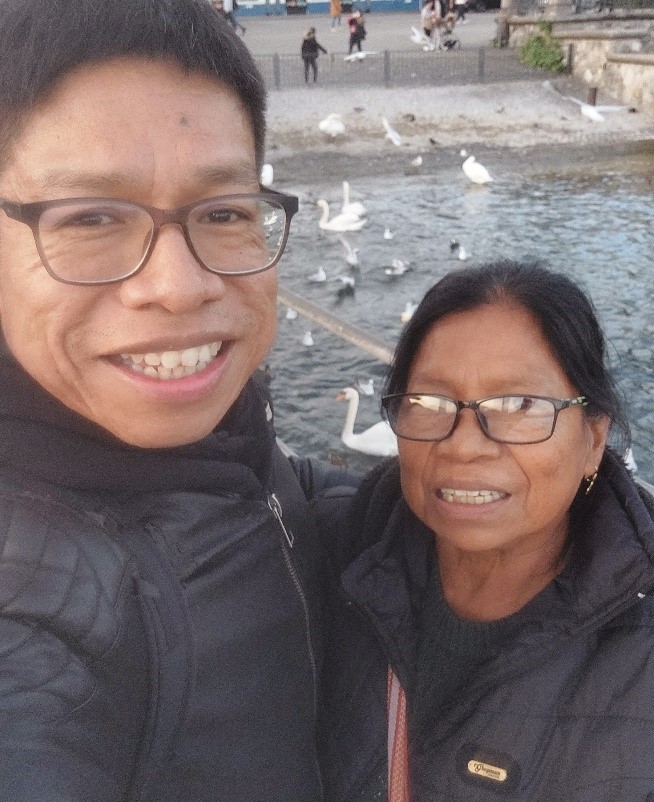
That weekend, I not only discovered my heritage but also connected with the mother I never knew.
The experience was a testament to the power of understanding, reconnecting, and embracing our shared histories.